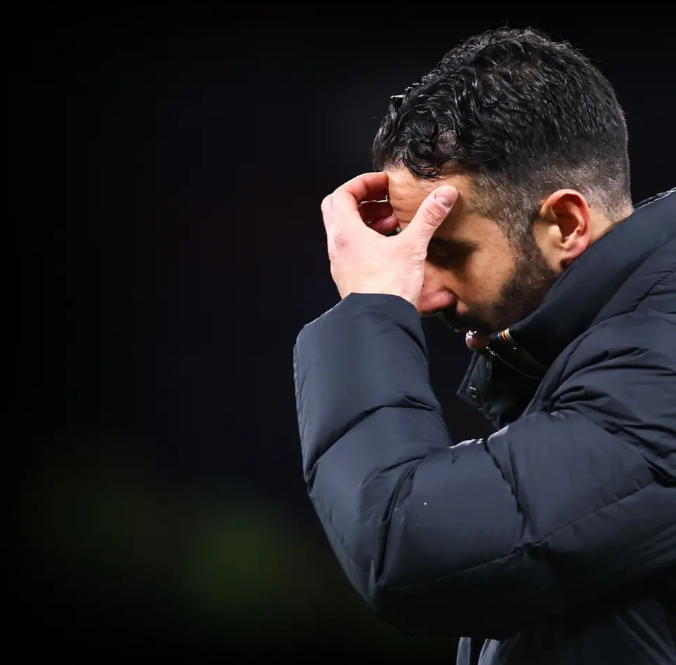

The enduring image of Ruben Amorim’s 14-month tenure at Manchester United may well be the one of him cowering in the dugout at Grimsby.
It came during an August trip to the seaside for a Carabao Cup match that went horribly wrong for United – an embarrassing 12-11 defeat on penalties the first time in the club’s history they had been beaten by a team in the fourth tier.
Amorim’s post-match comments smacked of someone who was about to admit the job was too much for him, only to climb down a couple of days later when he said emotions frequently get the better of him and had led him to saying unwise things in public.
He wasn’t going to stop, though. As with many aspects of his personality, once Amorim is on a set course, he will not change. It is something that would contribute to his downfall.
One critic close to the dressing room said privately that while Amorim was enthralling when he spoke to the media, it was all he was actually good at. A damning assessment, but harsh too.
Amorim’s last match was a 1-1 draw with Leeds – a result that leaves them a credible sixth in the Premier League, but one sandwiched by headline-grabbing comments made to journalists.
His first interaction with the media on Friday included a thinly disguised admission there were splits behind the scenes. After the game, he launched his final broadside in his last answer, which included the statement he “would not quit”.
That, effectively, meant United had to either back Amorim or sack him.
With his tactics an ongoing concern and the hierarchy already distinctly unimpressed by his brutal dismissal of academy players – as well as criticism of senior members of the squad – they were always likely to choose the second option.
As the fallout continues, BBC Sport goes inside Amorim’s reign as Manchester United head coach – not manager – and tries to explain how we got here.
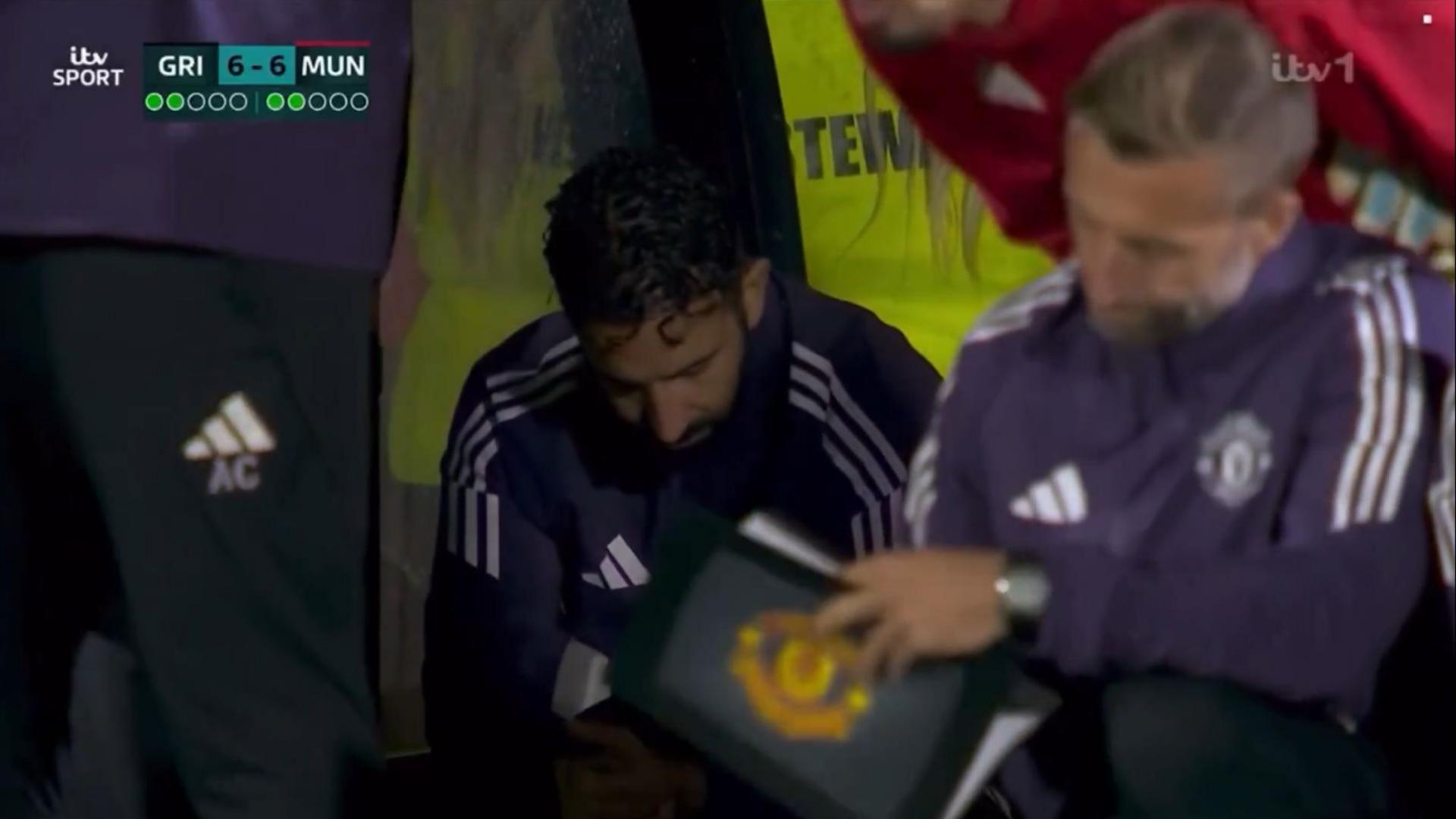
Image source: ITV
Image caption: Amorim remained in the dugout during the Grimsby penalty shootout defeat
The Pope, the formation and the beginning of the end
Amorim’s appointment was viewed as a progressive move – the club bringing in someone who would work in a modern structure and develop as he went along.
But with the 40-year-old came a specific style of play – and 3-4-3 formation – he had used at Sporting.
The more Amorim was asked about it, the more he doubled down on his belief that to change would undermine him in the eyes of his players, and make them think he was not committed to his own messaging.
While he was certain of his methods – once suggesting even the Pope couldn’t persuade him to change – he admitted in October he had to tell his players to ignore external voices repeatedly saying the system had to be scrapped.
“Is the media going to dictate what I’m going to do?” he told journalists. “It cannot be. It’s not possible to sustain that.
“But my players, I guarantee you, they are listening to you and they are putting that inside because we are not winning games.
“They have to believe in me because I watch more games than you guys combined.”
This was all brought into sharp focus on 30 December when – four days after eventually reverting to a back four for the first time in the 1-0 win over Newcastle – he immediately went back to a three-man defence against Wolves.
It meant moving Patrick Dorgu from a right-sided attacking role, where he had been so effective on 26 December, to left wing-back.
Fans were stunned and dismayed in equal measure.
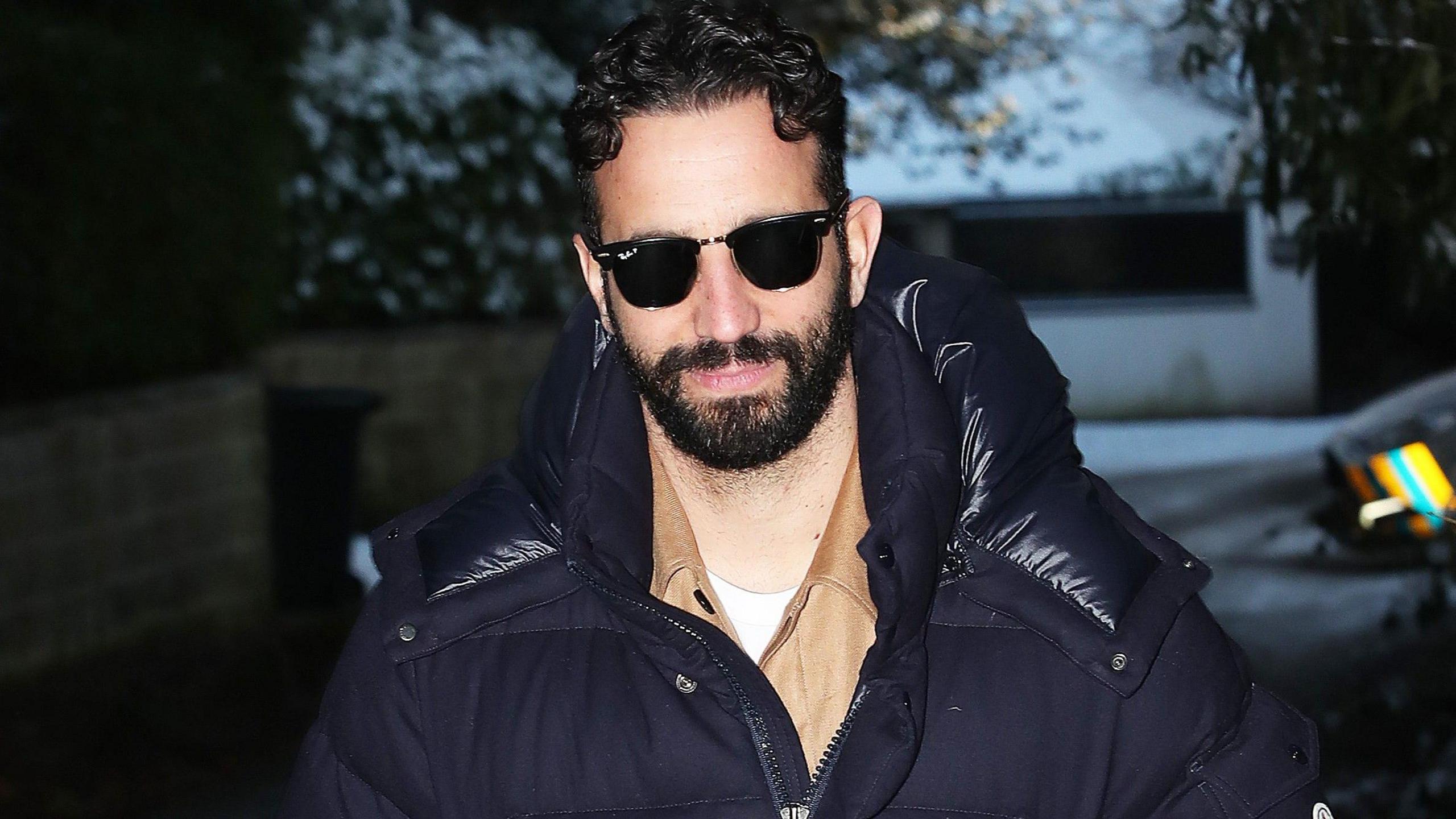
Image source: Eamonn & James Clarke
Image caption: Amorim was pictured outside his house on Monday morning
By that point, United had already tried to persuade long-term target Antoine Semenyo to join them from Bournemouth by telling him he would play on the left wing.
That was a clear sign the club viewed the future as being something different to 3-4-3, given they had already spent in excess of £200m on attacking players.
It is no surprise, therefore, the formation against Wolves and subsequent result – a 1-1 draw against a side that had collected just two points all season and led to the team being booed off – was viewed extremely negatively internally at the club.
Technical director Jason Wilcox spoke to Amorim privately afterwards, encouraging greater tactical flexibility.
United continued with their back three at Leeds.
It was another massive backward step in Amorim’s relationship with his bosses, and his continued criticism just heightened that situation.
Amorim wanted to be left alone to do his job, free from the unwanted influence of Wilcox.
But what Amorim felt was interference, United believed was normal feedback, which had been repeatedly resisted.
The situation had become untenable. Yes, United are sixth – in line with pre-season expectations – but they have a squad many believe could, with a few simple tactical tweaks, deliver much better results.
On Monday morning at Carrington, Wilcox and chief executive Omar Berrada told Amorim he had been relieved of his duties.
The preparation – and the quirks
While results were not always good, players remained onside – at least those who were not in the ‘bomb squad’ exiled at the start of pre-season training.
Speaking to players publicly and privately during United’s summer trip to the United States, there was genuine enthusiasm for the season that lay ahead.
Amorim had a few quirks, but most coaches do.
When United opened their doors for the first 15 minutes of training the day before European games, it was strange to see Amorim watch the sprints and rondos on a different pitch – sometimes 50 yards away, and far removed from his coaching staff.
He was far more involved – whistle in hand – when the sessions began, though he wasn’t keen to let the media into those.
There was a full open session in Malaysia on United’s post-season trip in May, but that whole expedition was not run on fully professional lines given the amount of downtime that was allowed.
Once United arrived at their training base in Chicago in July, access was limited. The candour of Amorim’s media conferences was not matched by his openness with training.
He was meticulous in his preparation, though.
Footage of his first training session at United showed him explaining to midfielder Kobbie Mainoo exactly how many strides he needed to move after laying off a pass, then where to open out his body to create maximum passing angles.
In the summer, he had two players taking up the same positions in training, then ran through different scenarios to ensure they moved into the right area of the pitch.
While this may seem peculiar – and would have looked so had anyone witnessed it -it does make sense given individuals were allocated positions and a hierarchy installed.
The theory and practice is good. But events in actual matches take their course.
Amorim could have chosen four players for each position and might not have ended up with Mason Mount at left wing-back, which former United skipper Gary Neville criticised him so strongly for in the wake of a 3-1 defeat at Brentford.
How it all started for Amorim
We tend not to find out about discussions that have taken place around the appointment of a manager until long after the event.
But we know this time.
We know because five months after United hired Dan Ashworth as a “best in class” sporting director in July 2024, he left after his suggestions for potential replacements for Erik ten Hag were deemed to not be imaginative enough.
Instead, Berrada lured Amorim from Sporting, telling the Portuguese it was ‘now or never’ when he asked if his appointment could be delayed from November until the end of the season.
At the time, in addition to Berrada, United had Wilcox as technical director, Christopher Vivell as an interim director of recruitment and Ratcliffe’s right-hand man Sir Dave Brailsford as a football club director.
The first three remain integral figures in United’s recruitment team, Wilcox has more responsibility, and Vivell has been installed on a permanent basis. Brailsford has backed away, though, and is concentrating on his wider role as Ineos’ head of sport.
Picking through the wreckage of another failed managerial appointment, the spotlight is on them as much as Amorim.
They knew he was wedded to a certain formation, which he was not willing to change no matter how much external criticism he received.
Yet United insiders feel Amorim had pledged to adapt when he spoke to them privately. One of their biggest frustrations is he did not follow up on that in reality.
The players exiled and the players signed
Under Amorim, United have plumbed depths that should not be possible the way football’s finances are arranged these days.
The fourth richest club in the world, according to Deloitte’s 2025 rankings, have struggled – for the most part – to compete with well-run smaller rivals like Brentford, Bournemouth and Brighton, finished last season behind West Ham, and were level on points with Wolves.
Amorim went into the summer promising this season would be better. It has been – to an extent – but is it right to measure a United manager against a 15th-place finish?
The spotlight, though, cannot just be on the coach.
United knew what they were getting into. Does Ratcliffe’s “best in class” apply to Berrada? Or Wilcox, whose experience as a technical director was limited to 15 months at Southampton before he accepted the United job?
In going for Amorim and delivering their ‘now or never’ ultimatum, United’s hierarchy must have known the squad being inherited did not fit the coach’s style. They backed him to the tune of more than £200m in the summer and also signed off his decision to exile Marcus Rashford, Jadon Sancho, Antony and Alejandro Garnacho.
Maybe there was unease at Amorim’s method of dismissing Garnacho, which effectively reduced his value in a market the player himself cut to one by sticking to his desire to join Chelsea.
They also went with Amorim’s desire to change his main striker, meaning £72m Rasmus Hojlund has joined Scott McTominay at Napoli, while Benjamin Sesko has scored two goals in 17 appearances following his £74m move from RB Leipzig.
Amorim’s abject record
Premier League win ratio – permanent managers post Alex Ferguson
| Games | Wins | Draws | Losses | Win percentage | |
|---|---|---|---|---|---|
| Ruben Amorim | 47 | 15 | 13 | 19 | 31.9% |
| Ralf Rangnick | 24 | 10 | 7 | 7 | 41.7% |
| David Moyes | 34 | 17 | 6 | 11 | 50% |
| Louis van Gaal | 76 | 39 | 19 | 18 | 51.3% |
| Ole Gunnar Solskjaer | 109 | 56 | 29 | 24 | 51.4% |
| Erik ten Hag | 85 | 44 | 14 | 27 | 51.8% |
| Jose Mourinho | 93 | 50 | 26 | 17 | 53.8% |
Source: Opta
Where they drew a line was Emiliano Martinez.
Amorim wanted Aston Villa’s World Cup-winning goalkeeper. United’s powerbrokers refused to sanction that, preferring to invest in the youth of Senne Lammens – on a much lower salary. Data analysis concurs with objective judgement Lammens has the capability to become of one Europe’s best goalkeepers at some point – and United officials say they remain comfortable with their choice.
Instead, United prioritised their hefty investment towards the forward positions with a view to greater return on investment.
But heads are still scratched over the wisdom of selling McTominay, then spending far more on Uruguay international Manuel Ugarte, who played no role in the Europa League final Casemiro started.
Recruitment is a collective failing – and predates Amorim by a long way. The failed pursuit of Semenyo is proof United are no longer the draw they once were.
Amorim is yesterday’s man now, just as David Moyes, Louis van Gaal, Jose Mourinho, Ole Gunnar Solskjaer, Ralf Rangnick and Ten Hag were before him.
The search for a successor is on. But it may take more than a new man at the helm, with a new formation, to sort out the problems at Manchester United.