
As global wildlife populations continue to decline at alarming rates, scientists from Ghana, Brazil, and the United Kingdom have converged in Kumasi for a landmark workshop aimed at equipping the next generation of conservation researchers with the tools needed to reverse the trend.
According to the Living Planet Report 2024, global wildlife populations declined by an average of 73% between 1970 and 2020, driven by habitat loss, climate change, and overexploitation. More than one million species are now threatened with extinction, with amphibians and marine mammals among the most at risk. Africa has recorded the second-highest regional decline at 76%, a figure attributed to intense human pressure on natural habitats.
The Biodiversity Monitoring Tools Workshop, held from March 24 to 27, 2026, operates under the theme: “Capacity Building and Observation Network for Nature and Climate in Tropical Ecosystems (CONNECT).”
The event is a collaboration between the Forestry Commission of Ghana, the Forestry Research Institute of Ghana (CSIR-FORIG), the University of Ghana, and the University of Bristol in the United Kingdom.
Targeting postgraduate students, early-career researchers, and biodiversity conservation professionals, the workshop introduces participants to emerging technologies transforming conservation science, including Artificial Intelligence (AI) for biodiversity monitoring, Species Distribution Models (SDMs), and Environmental DNA (eDNA) analysis.
These innovations enable non-invasive, large-scale data collection on species movement, population health, and ecosystem changes, significantly reducing the labour burden on conservation researchers.
For the organizers, the stakes go beyond scientific training.
Senior Research Fellow at the University of Bristol, Fillipe Machado França, stressed the importance of bridging the gap between knowledge generation and real-world impact.
“One of the things we want to achieve is knowledge exchange and training, particularly here in Ghana. We aim to fill the science and policy gap. Sometimes we generate knowledge, but we need to ensure it is adopted and translated into real actions on the ground,” he said.
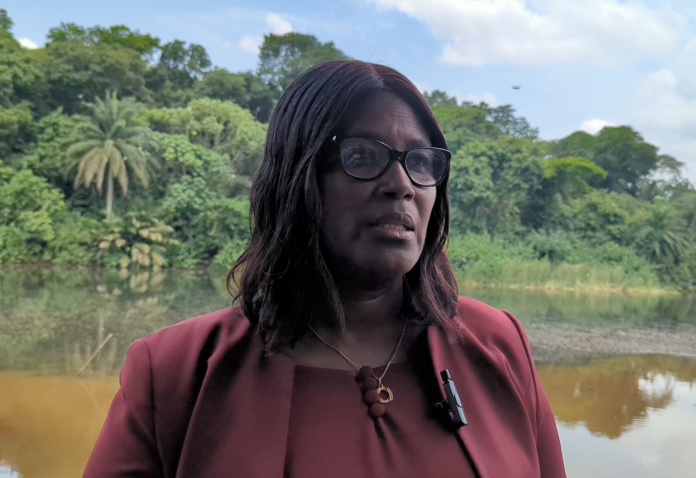
Deputy Director of CSIR-FORIG, Dr. Mrs. Lucy Mensah, highlighted the long-term institutional benefits of the international partnership.
“Partnering with the University of Bristol and our Brazilian colleagues will build the capacity of a new generation of scientists in Ghana. This will help us achieve our mandate, which includes the conservation of biodiversity and forest resources,” she said.
Dr. Mensah also called on the Ghanaian government to invest in training more professionals in artificial intelligence so AI tools can be meaningfully integrated into national conservation efforts.
“With regards to technological improvements, extensive training is needed because there are many types of AI. Government should support training of young scientists in this area,” she added.
Participants at the workshop expressed enthusiasm about the practical value of the programme.
Jannatu Fridaus, a researcher from the Department of Marine and Fisheries Sciences at the University of Ghana, said the knowledge gained would directly inform her research.
“I expect that the knowledge shared in the workshop on AI-driven biodiversity tools, Species Distribution Models (SDMs), and eDNA will be directly applicable in my research,” she emphasized.
ALSO READ:
Newtown building collapse: 20 hospitalized, 3 confirmed dead
Ghana, Japan, UNICEF launch US$2.3m partnership to tackle child labour
Gov’t to borrow GH¢15.231bn via T-bills, bonds between March and June…