

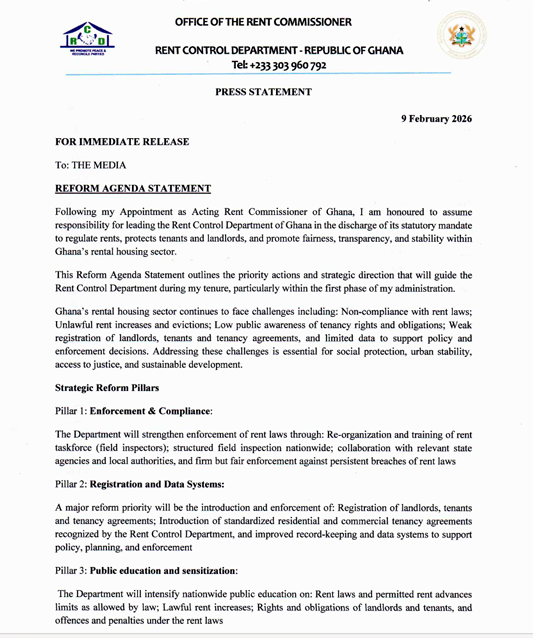
The Acting Rent Commissioner of Ghana, Frederick Opoku, has unveiled a comprehensive reform agenda aimed at strengthening enforcement of rent laws, protecting both tenants and landlords, and promoting fairness and transparency in the country’s rental housing sector.
In a press statement on February 9, 2026, Mr. Opoku said the reforms will guide the operations of the Rent Control Department, particularly during the first phase of his tenure following his appointment as Acting Rent Commissioner.
He highlighted persistent challenges in Ghana’s rental housing sector, including unlawful rent increases, non-compliance with existing rent laws, low public awareness of tenancy rights, weak registration of landlords and tenants, and a lack of reliable data to inform policy and enforcement decisions.
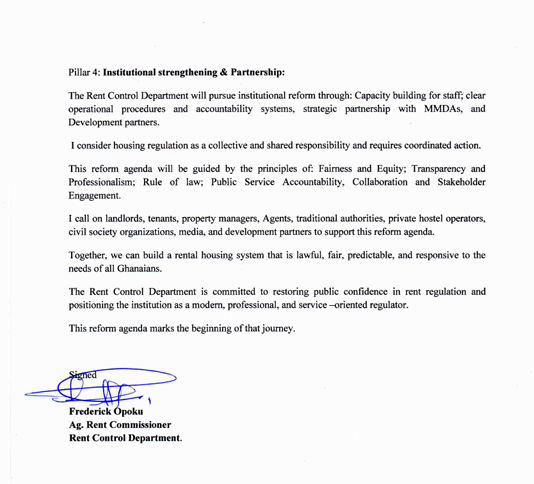
The reform agenda is anchored on four key pillars: enforcement and compliance, registration and data systems, public education and sensitisation, and institutional strengthening and partnerships.
Mr. Opoku explained that the Department will intensify inspections nationwide, reorganise and train rent taskforces, and collaborate with state agencies and local authorities to ensure firm yet fair enforcement of rent laws.
He also announced plans to register landlords, tenants, and tenancy agreements, alongside introducing standardised residential and commercial tenancy agreements officially recognised by the Department.
As part of the public education initiative, the Rent Control Department will step up nationwide sensitisation campaigns on rent laws, lawful rent advances and increases, and the rights and responsibilities of both landlords and tenants.
Mr. Opoku called on landlords, tenants, property managers, traditional authorities, civil society organisations, the media, and development partners to support the reforms, emphasising that housing regulation is a shared responsibility.
He assured the public that the Department is committed to restoring confidence in rent regulation and positioning itself as a modern, professional, and service-oriented institution.
READ ALSO: