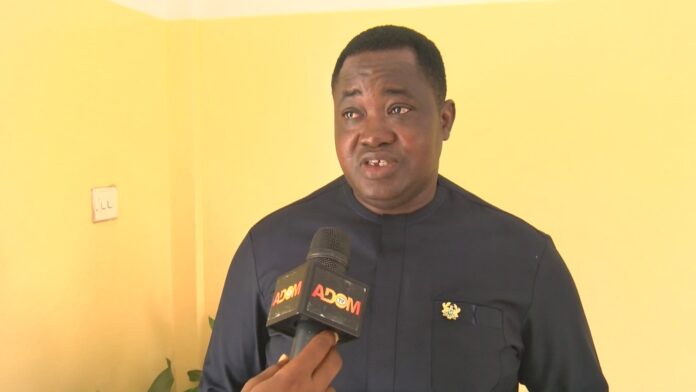

At the opening of the Summer School 2026 Ghana on Extractive Investments and Resource Conflicts in Sub-Saharan Africa, Prof. Michael Ayamga delivered a compelling call to action: African scientists and scholars must reclaim their rightful place in shaping public policy.
Speaking in his capacity as Deputy Chief Executive Officer of the Environmental Protection Authority Ghana and a Volkswagen Foundation Africa Fellow, Prof. Ayamga addressed early-career scholars, researchers, and policy thinkers gathered to explore the complex relationship between extractive investments and resource conflicts across Sub-Saharan Africa.
Extractives: Opportunity and Contradiction
Prof. Ayamga framed the discussion within Africa’s broader development journey. He noted that for decades, the extractive sector has represented both opportunity and contradiction.
While the continent possesses vast reserves of minerals, oil, and other natural resources, many communities living closest to these resources remain among the poorest.
Traditional extractive models, he explained, have often been heavily investor-centered—structured to prioritize multinational corporations and profit flows, while local communities receive only limited benefits.
“This imbalance,” he said, “has contributed to tensions across parts of the continent. In regions of the Sahel, frustrations linked to perceived resource injustice, marginalization, and weak governance have fueled social unrest and heightened calls for resource nationalism. In extreme cases, such grievances have contributed to political instability.”
“When citizens feel excluded from the benefits of their own natural resources, the legitimacy of both governments and institutions becomes fragile,” Prof. Ayamga added.
Rethinking Resource Governance
Despite these challenges, Prof. Ayamga emphasized that change is underway. Governments across Africa are beginning to rethink how natural resources are governed and how extractive industries can contribute meaningfully to national development.
In Ghana, he highlighted new policy approaches that move beyond extraction as a mere revenue source toward models that drive economic transformation and social benefits. Among the initiatives is the proposed Ghana Gold Board, popularly known as GoldBod, which seeks to strengthen national participation and oversight within the gold value chain to ensure the country captures greater value from its mineral resources.
Discussions are also ongoing around a sliding-scale mineral royalty system that adjusts payments in line with global commodity prices, ensuring fair benefits during periods of high mineral prices. Alongside these reforms are renewed efforts to promote responsible corporate mining practices, emphasizing environmental stewardship, stronger community engagement, and corporate social investment programs that directly improve host communities.
The Role of Scholars
Yet, Prof. Ayamga stressed, policy reforms alone cannot resolve the complexities of resource governance. Natural resource management sits at the intersection of multiple disciplines, including economics, ecology, sociology, law, security studies, and political science.
Addressing these challenges requires scholars who are willing to work across academic boundaries and collaborate closely with policymakers, industry actors, and local communities.
He warned that public discourse on national development in recent years has often been dominated by commentary rather than evidence. While debate is essential in any democracy, many discussions on social media lack the empirical grounding needed to guide sound policy decisions.
For Prof. Ayamga, this trend represents both a challenge and an opportunity. He urged Africa’s researchers, scientists, and scholars to step forward—not merely as observers, but as active leaders in shaping policy. Their data, fieldwork, and analytical expertise must guide how extractive systems are designed, how communities are protected, and how resource wealth can be transformed into sustainable development.
“How do we design extractive systems that attract investment while safeguarding national interests?” he asked.
“How do we ensure that natural resource wealth becomes a driver of prosperity rather than a trigger for conflict?”
These questions, he emphasized, cannot be answered through commentary alone. They require rigorous research, collaborative inquiry, and sustained engagement between academia and policymakers.
For the early-career scholars at the summer school, his message was clear: innovation must extend beyond academic journals and laboratory research—it must influence the policies that determine how Africa’s natural resources are governed.
Ultimately, Prof. Ayamga suggested, the future of resource governance in Africa may depend on whether the continent’s intellectual community is willing to embrace this responsibility.