
Manchester United are still aiming to have their new stadium built and ready to host the 2035 Women’s World Cup final.
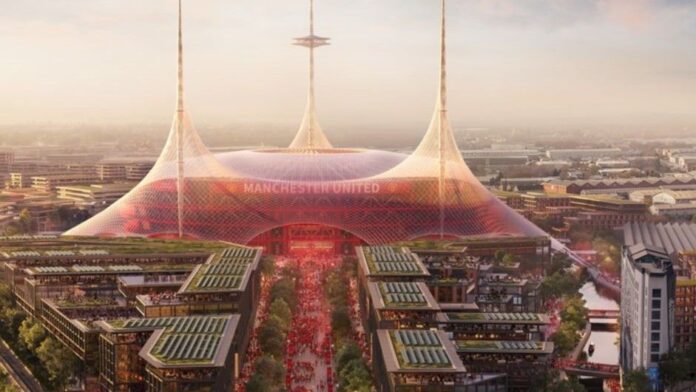
It is more than a year since the club’s co-owner Sir Jim Ratcliffe unveiled grand plans for a 100,000-seater venue close to the site of their current Old Trafford home.
At the time, Ratcliffe spoke of trying to get construction down to a five-year timescale, which raised expectations about how quickly the project would begin.
However, as has been pointed out privately, at that point the club did not have the land to build on, the plans were not in place and there was no detailed business case.
The five years, in actuality, starts from the point at which United get the green light to put spades in the ground.
“We did say it would take between four and five years for construction,” Collette Roche, newly appointed by United as the chief executive of their New Stadium Development, told the club’s Inside Carrington podcast.
“People read that as we might have the stadium ready for 2030. But it does take one or two years to get ready for construction; to get the land assembled, to get the funds in place and to get the planning permission.
“That’s the part that we’re doing right now. We’ve not named a date for opening, but we are on track within those timescales.”
United sources had previously told BBC Sport the aim was to host the 2035 showpiece. That private message has now been repeated as Roche told MUTV: “Our plan is to be able to host other international sporting events and entertainment events.
“Andy Burnham, the mayor, said his ambition would be for us to host the final for the Women’s World Cup in 2035, so if we could pull that off, that would be incredible.”
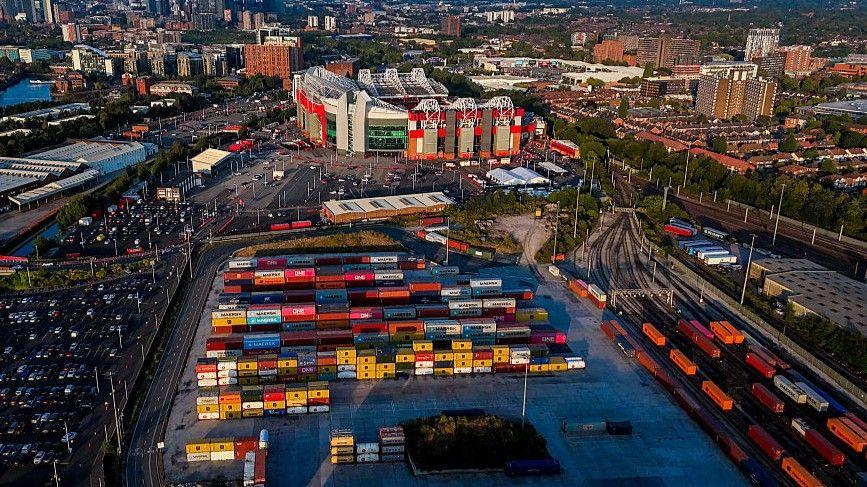
Image source: Getty Images
Image caption: The area close to Old Trafford intended for Manchester United’s new stadium
What exactly are Man Utd doing?
In answer to repeated questions about the stadium over the past few months, United have continued to stress work was going on ‘behind the scenes’.
Yet, in the absence of obvious, visible progression, plenty of observers have cast doubt on whether the project, likely to cost more than £2bn, will ever actually be built.
Roche has chosen to provide an update as part of a wider desire within the club to ask for patience from their vast fanbase.
While the launch of the Mayoral Development Corporation, chaired by Lord Coe, was ignored by many supporters – who are only interested in the brand new stadium, complete with the ‘circus tent’ as shown in the initial design – it forms an essential part of the wider Old Trafford Regeneration, of which United’s ground is intended as the centrepiece.
The desire is for all the relevant parts to move forward together, which means a huge number of stakeholders being aligned in terms of plans and timescales.
Much of Roche’s work is centred around this.
Where will the stadium be built and how much will it cost?
There is a general location but the precise details are yet to be agreed.
This cannot happen until United have acquired the land. There has been a lot of talk about the Freightliner terminal, but they are just one of multiple landowners.
Once the club have identified a precise site, then further work is needed to work out desired access routes, public transport links and where the 15,000 new houses will be built to ensure they are not negatively impacted by large scale events regularly happening in the stadium as intended.
United are understandably coy about this, but with good reason.
Until plans are in place, they don’t know what materials are required for construction. They do not know whether Ratcliffe’s idea of using the nearby Manchester Ship Canal for transportation will become reality. Fundamentally, they won’t say how much it will cost because they don’t know.
How will it be paid for?
United sources are confident finance for the project will be available. What is less clear, is what method will be used.
It is possible for Ratcliffe and the Glazer family to use their own money. This would be clean in the sense that it would keep the stadium ownership under the club’s umbrella and not dilute their respective stakes in United.
However, the Glazer family have been criticised for taking money out of the club, not putting it back in. Their takeover in 2005 was funded with United’s own money and it would be a major surprise if the strategy was changed.
Alternatively, more could be borrowed although, given United already have debts in excess of £1bn including outstanding transfer fees, the wisdom of that has been questioned.
A new company could be set up, with investors buying into it. That would split the stadium from the club, and as Old Trafford is used as collateral for the current long-standing debt, how that would work is not clear either.
All this has to be balanced against the continuing demands of spending on the various squads, including the men’s first-team, by far the most expensive part of the club.
“I’m delighted to say we’ve had a lot of interest,” added Roche, of the funding situation. “There’s a lot of people and organisations that want to invest, not just in the stadium, but also in the wider stadium district.
“Those conversations are naturally going to be behind closed doors.”
What happens now?
It might be a couple of years before a ‘new Old Trafford’ begins to rise up from the ground.
For now, work will continue unseen.
However, in a matter of months, it is anticipated the land situation will be resolved. After that, United will move on to the planning strategy, the procurement strategy and the high-level engineering design.
That is when planning permission will be submitted and fans will finally get to see what the club intend their stadium to look like and how close it is to those initial artists’ impressions Ratcliffe unveiled last March.
“Same ambition, same vision,” said Roche.
“We want to build a stadium that’s befitting of our past, but also fit for the future.”