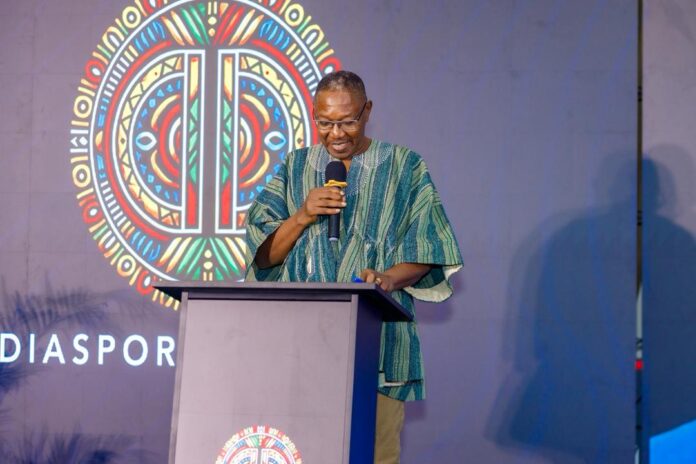

Deputy Education Minister Dr. Clement Abas Apaak has urged the diaspora to partner with local intellectuals to expand global opportunities and build pathways that align education with work.
Delivering an address at the Diaspora District Global Education Conference in Accra on Wednesday, December 17, 2025, Dr. Apaak said that sustainable progress depends on collaboration, not replacement.
“To the diaspora: your role is not to rescue or replace, but to connect with local brilliance and build together for global opportunity,” he stated.
He emphasized that Ghana’s development agenda must be anchored in co-creation. “We must co-create systems where talent can thrive wherever it is found,” Dr. Apaak said, adding that the future young people deserve will require intentional partnership.
“The future where young people graduate with purpose, confidence, and clear pathways will not happen by accident. It will happen because we chose to work together.”
The Deputy Minister called for a shift from rhetoric to action in supporting educators.
“Let us honor educators not only with praise, but with partnership,” he urged. “Let us connect education to opportunity with intention, and let us build systems worthy of the talent that already exists across Ghana, Africa, and our global diaspora.”
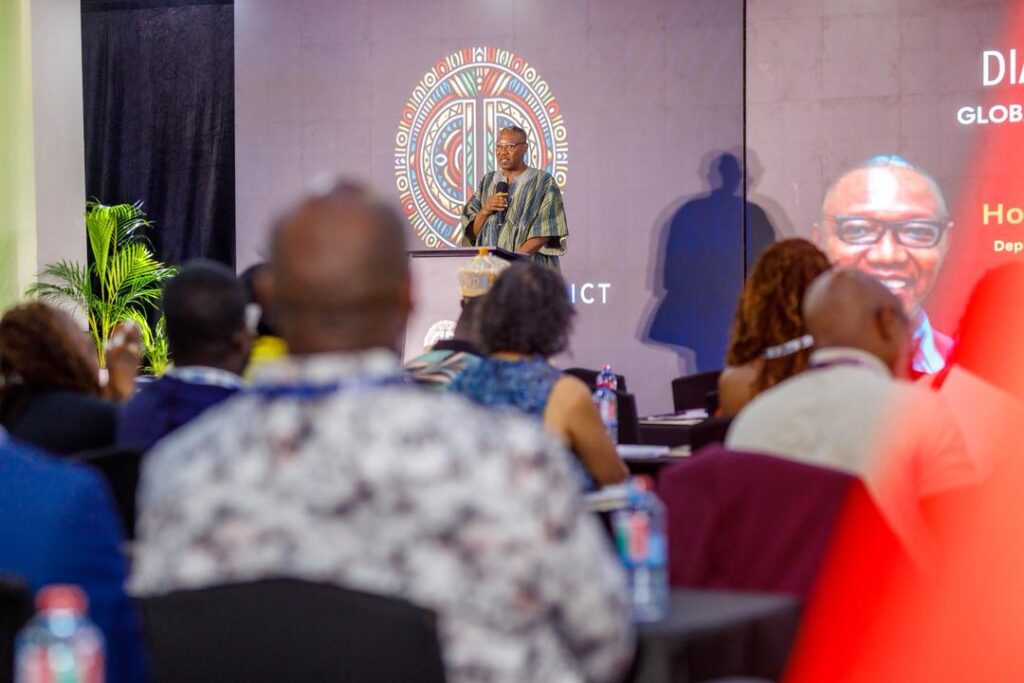
Dr. Apaak outlined a four-part partnership framework, stressing the complementary roles of key actors.
“Educators shape minds and potential. Industry understands skills, markets, and the future of work. Government sets vision and creates conditions for scale. And the diaspora brings global perspective, experience across systems, and bridges to opportunity,” he explained.
He warned that fragmentation leaves young people stranded. “When these forces operate separately, young people are left to navigate the gap alone. When they work together, that gap becomes a bridge,” Dr. Apaak said.
According to him, the focus should be on building practical ecosystems. “We must create ecosystems where learning leads somewhere, where skills translate into livelihoods, where education prepares young people not only for exams but for life,” he noted.
Dr. Apaak reaffirmed the central role of teachers and education professionals in shaping policy and partnerships.
“To the educators in this room and beyond: your work matters more than you are often told. Your insight must shape policy, your experience must inform partnerships, and your leadership must remain central to designing the future of education and work.”
He maintained that aligning education with opportunity does more than transform individuals. “When education is aligned with opportunity, it shapes communities, strengthens economies, and defines the future,” he said.