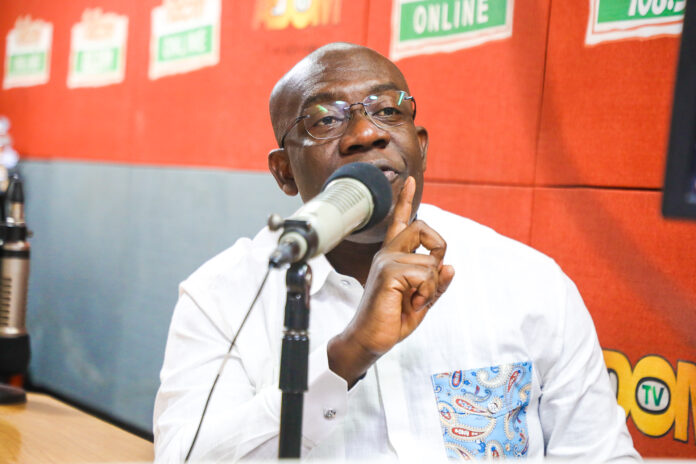

Viral quote sparks outrage—but evidence for the exact wording remains unclear
A widely circulated statement attributed to former Information Minister Kojo Oppong Nkrumah has ignited intense public debate, after claims emerged that he urged Ghanaians to pray for Iran to keep the Strait of Hormuz closed in order to drive up fuel prices and make the current government unpopular.
The alleged quote, which has gained traction across social media platforms, suggests a deliberate call for global disruption to create domestic political advantage—an assertion that has drawn sharp criticism from sections of the public.
But how accurate is this claim?
What is being claimed?
The viral statement attributes the following words to Mr. Oppong Nkrumah:
“Let us pray Iran refuses to open the Strait of Hormuz so oil prices can keep rising… so we can capitalize on that to make this government unpopular.”
The implication is clear: that a senior political figure is encouraging economic hardship as a strategy for political gain.
What evidence exists?
Checks conducted show that:
– There is no verified full video, transcript, or official recording publicly available that confirms this statement in the exact words being circulated.
– Most references to the quote originate from social media posts, paraphrased commentary, or short, decontextualised clips.
No major credible outlet has, at this stage, published a fully sourced, verbatim version of the statement.
What may have been said?
It is not uncommon in political discourse for opposition figures to highlight how global economic developments—such as rising oil prices—can influence domestic conditions and public sentiment.
Analysts say it is plausible that Mr. Oppong Nkrumah may have made remarks linking global oil price shocks, economic pressure on government, and potential political consequences.
However, this is not equivalent to explicitly calling for or endorsing hardship.
Why the controversy matters
The strength of the backlash reflects broader public sensitivity to rising cost of living, fuel price volatility, and perceived politicisation of economic hardship.
For many critics, even the suggestion—real or perceived—that leaders would benefit from citizens’ suffering raises ethical concerns about political conduct.
Supporters, on the other hand, argue the statement has likely been taken out of context or exaggerated for political effect.
Verdict
– The exact quote remains unverified
– High likelihood of distortion, paraphrasing, or missing context
– Underlying political argument (oil prices affecting governance perception) is plausible
Bottom line
Until a full, unedited recording or credible primary source emerges, the viral quote should be treated with caution.
In an era where fragments of speech travel faster than facts, the line between what was said—and what is said to have been said—can easily blur.
And in politics, that difference can be the distance between debate and distortion.