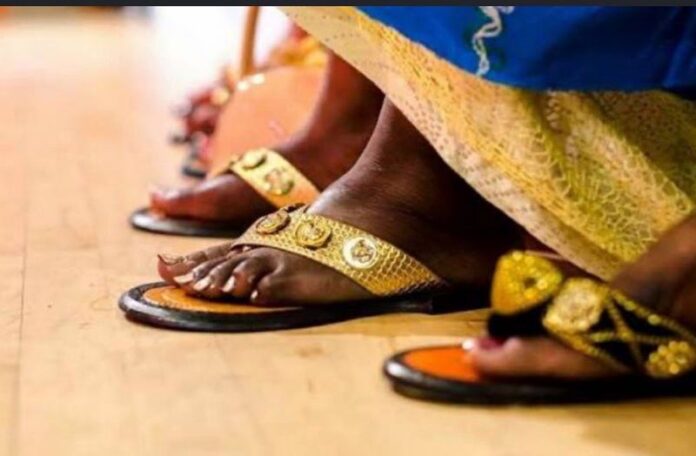

On a wooden table in the bustling commercial hub of Adum in Kumasi, strips of leather and old tires are carefully arranged. With steady hands, artisans cut, shape, and stitch them into slippers that carry centuries of tradition.
These are Ahenema, footwear once strictly reserved for royalty.
For generations, royal slippers have formed an essential part of the regalia worn by chiefs and queens among the Akan, Ga, and Ewe ethnic groups in Ghana. Simple in appearance yet often beautifully adorned, Ahenema symbolize dignity, authority, and belonging within traditional leadership.
In the Akan language, a chief is called Ohene, while the plural form is Ahene. The name Ahenema itself reflects this royal connection. Derived from Ahene (kings) and ma (children), it literally translates as “the children of kings.”
Ghana tourism promoter Johnny explains that the naming carries a story of reverence for authority.
“In the past, Ahenema were worn strictly by royal descendants and often named after the king. Later, the naming convention changed, and the slippers were named after the children of the king to avoid mentioning the king’s name in vain,” he said.
Traditionally, Ahenema were crafted from wood and rope, elevating the wearer slightly above the ground. Today, artisans use leather, recycled tires, and rubber, blending traditional aesthetics with modern practicality.
Daniel, popularly known as Chawchaw, runs a workshop in Adum where he has spent years crafting Ahenema for customers across the country and beyond.
“For me, making Ahenema is not just a business; it’s a continuation of cultural identity,” Daniel said. “Whenever we wear African prints, these slippers complete the traditional look. Today, young and old wear them because they represent our identity.”
Ahenema come in two main styles: Asansan Tuo, the curved design, and Atine, the straight form. Both have long been worn by chiefs and royalty during festivals, funerals, weddings, and other ceremonial gatherings. The slippers are often marked with the number eight carved into the sole, symbolizing stability and balance.
Beyond style, Ahenema carry deep meaning within the institution of chieftaincy.
“It is very traditional. When a chief’s Ahenema is removed from their feet, it signals that their rule has ended,” Daniel explained.
Yet what was once confined to palace courtyards has gradually entered everyday cultural expression. Across Ghana, Ahenema are now worn at weddings, festivals, funerals, and even church services, often paired with kente and other traditional attire.
Daniel believes this growing popularity reflects a renewed appreciation for Ghanaian culture, especially among younger generations.
“People now want to wear them for weddings, naming ceremonies, and church,” he said. “But we shouldn’t focus on ‘Made in Ghana’ only during Ghana Month. We should integrate it into our lifestyle to promote Ghanaian craftsmanship.”
As Ghana celebrates another Ghana Month, the quiet craft of Ahenema making continues in roadside workshops like Daniel’s. Leather, rubber, and tradition come together to produce slippers that carry history beneath every step.
What once walked only the courts of kings now walks confidently among the people, a strong reminder that Ghanaian culture, like Ahenema, continues to live on in everyday life.