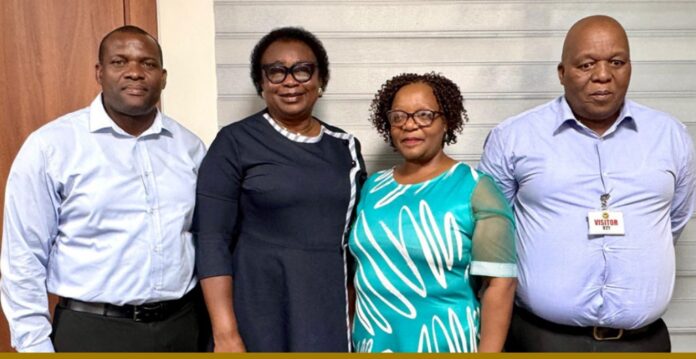

A delegation from the Kingdom of Eswatini has visited Ghana’s Office of the Special Prosecutor (OSP) as part of a study tour to learn from Ghana’s anti-corruption systems and institutional framework.
The visiting team included officials from the Eswatini Anti-Corruption Commission and representatives from Eswatini’s Ministry of Justice and Constitutional Affairs. The visit was aimed at examining Ghana’s legal and institutional arrangements for combating corruption, with a view to strengthening similar mechanisms in Eswatini.
During the engagement, the delegation held discussions with Ghana’s Deputy Special Prosecutor, Cynthia Lamptey, and several directors of the OSP, including Isidore Tuffour; Samuel Appiah-Darko; Albert Akurugu; and Boakyewaa Glover.
OSP officials briefed the visitors on the office’s mandate, legal authority, and operational procedures. Discussions also covered collaboration with other state institutions, international partnerships, stakeholder engagement, staffing, resource allocation, and accountability systems.
The Eswatini delegation expressed particular interest in Ghana’s legal framework that ensures the OSP’s independence from the executive branch. They explored the Special Prosecutor’s appointment process, security of tenure, and the office’s authority to prosecute cases independently of the Attorney-General’s Department.
Delegates noted that in Eswatini, both the Commissioner and Deputy Commissioner of the Anti-Corruption Commission are appointed by the King for five-year terms—a structure they acknowledged may raise concerns about institutional independence compared to Ghana’s model.
The discussions also examined possible reforms to strengthen Eswatini’s anti-corruption regime, including expanding the investigative authority of its commission.
Additionally, the delegation reviewed Ghana’s ongoing constitutional reform discussions, particularly proposals to entrench the anti-corruption body in the Constitution. These reforms aim to address issues under Article 88 of the 1992 Constitution and enhance Ghana’s ability to investigate and prosecute cases involving unexplained wealth.
The Eswatini delegation was led by Jabu Phakathi, who was accompanied by a legal advisor and a legislative drafter from the Ministry of Justice and Constitutional Affairs.
ALSO READ: