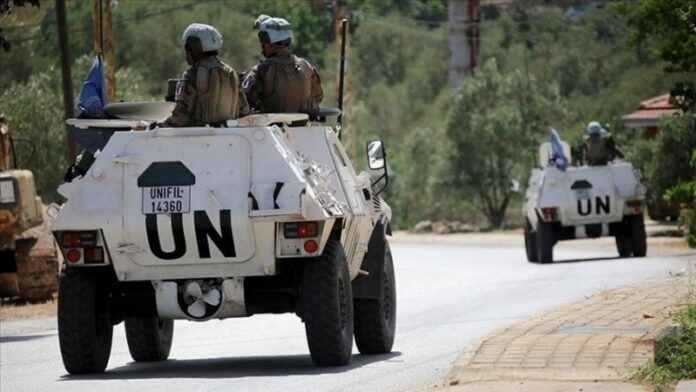

The Laadi Centre for Peace Building and Security Analysis (LACPSA-Ghana) has called on the Government of Ghana to immediately withdraw Ghanaian peacekeepers from Lebanon following a recent attack near their operational base.
According to the group, the incident involving the United Nations Interim Force in Lebanon (UNIFIL) should serve as a serious warning about the increasing dangers facing Ghanaian soldiers deployed on peacekeeping missions in the region.
In a statement issued by peace and security analyst Akunkel Musah, the group revealed that two missiles reportedly struck an area close to where the Ghanaian Battalion was stationed in southern Lebanon on March 6, 2026, between 17:45 and 17:52 local time.
The statement noted that the Ghanaian troops were performing their official peacekeeping duties under a United Nations mandate when the incident occurred.
“These men and women were not combatants but were deployed under the United Nations mandate to help maintain peace and stability in a volatile region,” the statement said.
LACPSA-Ghana argued that the attack highlights the growing risks facing peacekeeping forces as the conflict in the region becomes more complex and unpredictable.
The group warned that the ongoing military exchanges involving Hezbollah and what it described as the Israel–United States alliance have escalated beyond the traditional scope of peacekeeping operations.
According to the statement, the conflict has shifted from sporadic clashes and small-arms engagements to high-intensity ballistic missile strikes and sophisticated military confrontations.
“These developments create conditions that even well-equipped national militaries struggle to manage, let alone peacekeeping contingents whose mandate is primarily observation, monitoring, and stabilisation,” it noted.
LACPSA-Ghana further expressed concern that the UNIFIL command structure may no longer be able to guarantee the safety of Ghanaian troops on the ground.
The group explained that peacekeeping missions rely on a minimum level of restraint among conflicting parties, warning that when hostilities escalate beyond that threshold, neutral peacekeepers become increasingly vulnerable.
The statement also raised concerns about what it described as a growing disregard for international humanitarian law in the conduct of the conflict.
According to the group, the lack of adherence to established rules of engagement significantly increases the risk of collateral damage and complicates efforts to determine accountability if peacekeepers are harmed.
LACPSA-Ghana therefore urged the government, through the Minister for Foreign Affairs, Samuel Okudzeto Ablakwa, to initiate discussions with the United Nations regarding the temporary withdrawal or redeployment of Ghanaian forces until a ceasefire is achieved.
While acknowledging Ghana’s longstanding reputation as a reliable contributor to global peacekeeping missions, the group stressed that national pride and international commitments should not come at the expense of the safety of Ghanaian soldiers.
“The evolving situation in Lebanon demands a sober and pragmatic response. Until hostilities subside and a stable ceasefire is established, the Government of Ghana should strongly consider withdrawing our peacekeeping forces from Lebanon,” the statement concluded.
Below is their full statement:
WITHDRAW GHANAIAN PEACEKEEPERS FROM LEBANON NOW; LACPSA-GHANA
The recent attack on the Ghanaian Battalion stationed at the headquarters of the United Nations Interim Force in Lebanon (UNIFIL) in Southern Lebanon should serve as a serious wake-up call. The safety of Ghanaian soldiers deployed on peacekeeping missions must remain paramount, and the latest developments strongly suggest that the time has come for Ghana to reconsider its continued presence in Lebanon.
On March 6, 2026, between 17:45 and 17:52 (local), two missiles reportedly struck the area where Ghanaian peacekeepers were stationed while carrying out their official duties. These men and women were not combatants but were deployed under the United Nations mandate to help maintain peace and stability in a volatile region. The attack, therefore, highlights the growing dangers facing peacekeeping forces operating in an increasingly complex and unpredictable conflict environment.
Regardless of the circumstances surrounding the strike, the most responsible course of action at this moment is the immediate withdrawal of Ghanaian troops from the mission area. The ongoing military exchanges between Hezbollah and the Israel–United States alliance have escalated to a level that goes far beyond the traditional parameters of peacekeeping operations.
This is no longer a situation defined by small-arms fire, sporadic clashes, or ground confrontations that peacekeepers are typically trained to manage. Instead, the conflict has evolved into one characterised by high-intensity ballistic missile strikes and sophisticated military engagements. Such developments create conditions that even well-equipped national militaries struggle to manage, let alone peacekeeping contingents whose mandate is primarily observation, monitoring, and stabilisation.
A careful assessment of the situation on the ground suggests that the UNIFIL operational command may no longer be able to guarantee the safety of the Ghanaian Battalion. Peacekeeping missions depend on a minimum level of restraint among warring parties. When conflicts escalate beyond that threshold, the risk to neutral peacekeepers increases dramatically.
Equally troubling is the apparent disregard for international humanitarian law in the conduct of the conflict. When military engagements occur without clear respect for established international rules of war, the likelihood of collateral damage rises sharply. Under such circumstances, determining accountability in the event of harm to peacekeepers becomes extremely difficult.
The current display of military force in the region has effectively sidelined logic and order, placing everyone within the operational area at risk. Ghanaian soldiers, whose mission is peacekeeping rather than combat, should not be exposed to such unpredictable and high-risk conditions.
This situation also places Ghana’s diplomatic leadership in a difficult position. While the Minister for Foreign Affairs, Hon. Samuel Okudzeto Ablakwa, may not have the ability to influence the immediate dynamics of the battlefield, the government still retains the sovereign authority to prfioritize the safety of our troops. One practical step would be to initiate discussions with the United Nations regarding the temporary withdrawal or redeployment of Ghanaian forces until a ceasefire is achieved.
Ghana has built a proud international reputation as a reliable contributor to global peacekeeping missions. Our soldiers have served with distinction in many conflict zones across the world. However, national pride and international commitments should never come at the cost of the safety and lives of our men and women in uniform.
The evolving situation in Lebanon demands a sober and pragmatic response. Until hostilities subside and a stable ceasefire is established, the Government of Ghana should strongly consider withdrawing our peacekeeping forces from Lebanon. Protecting the lives of Ghanaian soldiers must always remain the nation’s highest priority
Akunkel Musah
Analyst: Peace, Security & Climate Change || Global Peace Campaigner
(akunkel.musah1@gmail.com )