
Ghana is set to declare twenty-one coastal communities as Marine Protected Areas (MPAs) in a move aimed at preserving the country’s marine biodiversity and improving fisheries management.
Starting with the Greater Cape Three Points in the Western Region, the declaration by the President will restrict fishing activities in the designated areas.
The initiative forms part of the government’s implementation of actions under the ‘30×30’ target, a global effort to protect and restore at least 30% of the earth’s land and ocean areas by 2030.
More than 190 countries have adopted the ‘30×30’ target under Target 3 of the Global Biodiversity Framework, committing to effectively conserve and manage 30% of the world’s land, inland waters, and oceans by 2030, particularly areas critical for biodiversity and ecosystem services.
However, global progress remains slow. Since 2022, international reviews indicate the world is off track, with only about 2.9% of the ocean fully or highly protected, far below the 30% target.
Ghana, like many other countries, has made limited progress toward meeting this commitment.
As part of implementing measures under the framework, some areas along Ghana’s coastline are expected to be declared Marine Protected Areas.
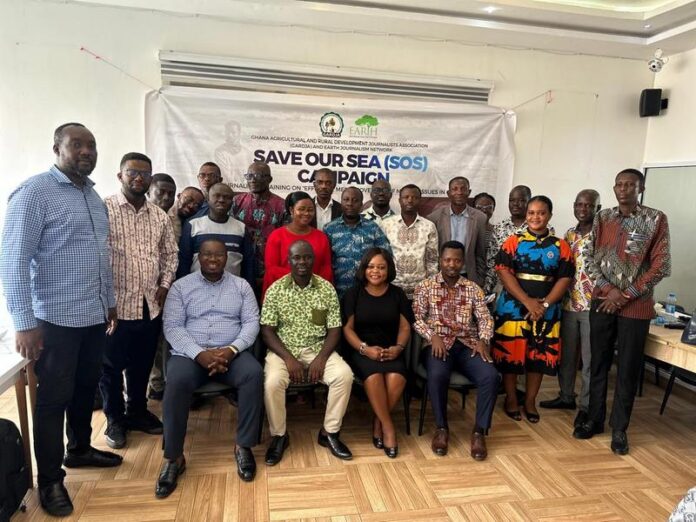
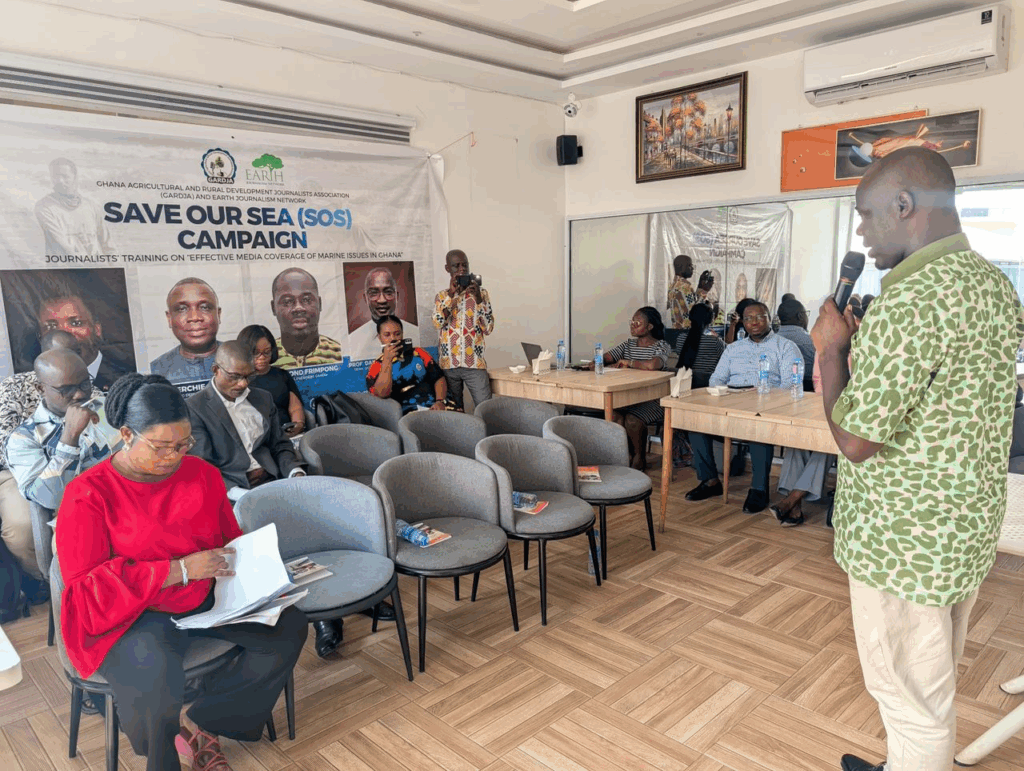
Acting Executive Director of the Fisheries Commission, Professor Kwadwo Berchie Asiedu, spoke during the launch of the “Save Our Sea” (SOS) campaign, organized by the Ghana Agricultural and Rural Development Journalists Association (GARDJA) in partnership with the Earth Journalism Network.
The SOS training on “Effective Media Coverage of Marine Issues in Ghana” equipped journalists with a robust understanding of the global 30×30 Marine Conservation Target.
Participants received guidance on reporting complex issues such as marine ecology, fisheries laws, illegal transshipment, bottom trawling, and the importance of ocean conservation.
Prof. Berchie Asiedu noted the MPA measure is intended to allow fish stocks to recover, promote spawning, and ultimately increase the catch per unit effort for local communities.
“We are starting this one by implementing the first Marine Protected Area (MPA). The MPA declaration is going to happen this year, maybe this month the President will go and declare the first Marine Protected Area at the Greater Cape Three Points,” he said. “The MPA has so many benefits. It’s for the fish to lay their eggs and also for the fish to rest. In that sense it would increase our catch per unit effort.”
Country Coordinator for the Earth Journalism Network, Charles Smith, emphasized the importance of the project, explaining that it seeks to empower journalists through training and grant opportunities, enabling them to report effectively on marine issues.
“This project is to support journalists through training and grants given to them so that they will be able to report on efforts that are being undertaken across three major countries. Here we are talking about Ghana, Mexico and the Philippines,” he noted.
National President of GARDJA, Richmond Frimpong, urged journalists to apply the knowledge and skills gained from the training to produce comprehensive reports on marine issues, ultimately benefiting the nation’s sustainable development efforts.
“We expect each journalist after going through this exclusive training to be able to write a comprehensive feature story or reporting on these marine issues,” he said.
The event brought together journalists, policymakers, and stakeholders committed to promoting marine conservation and sustainable fisheries management in Ghana.
ALSO READ:
Baba Jamal wins Ayawaso East by-election
ECG assures the public of meter accuracy amid billing concerns