
Medical laboratory professionals at Korle Bu Teaching Hospital have begun a phased industrial action that threatens to disrupt healthcare delivery, with a full shutdown of laboratory services scheduled for next week.
The Korle Bu chapter of the Medical Laboratory Professional Workers’ Union (MELPWU) initiated a sit-down strike on Wednesday, February 4, 2026, reducing operations across all hospital laboratories.
The first phase, running until Sunday, February 8, has already limited access to essential diagnostic services for thousands of patients.
In a strike notice signed by Chapter Chairman John Kofi Nakoja, members were instructed to suspend all Outpatient Department (OPD) laboratory services during this period. Only a small team will attend to emergencies for admitted patients. The notice also stated that samples requiring follow-up beyond February 8 will not be accepted, signaling a gradual winding down of services ahead of the next phase.
Currently, the Blood Bank and Cardiothoracic Centre Laboratory continue operations, but only for critical care patients. Routine cases are not being handled.
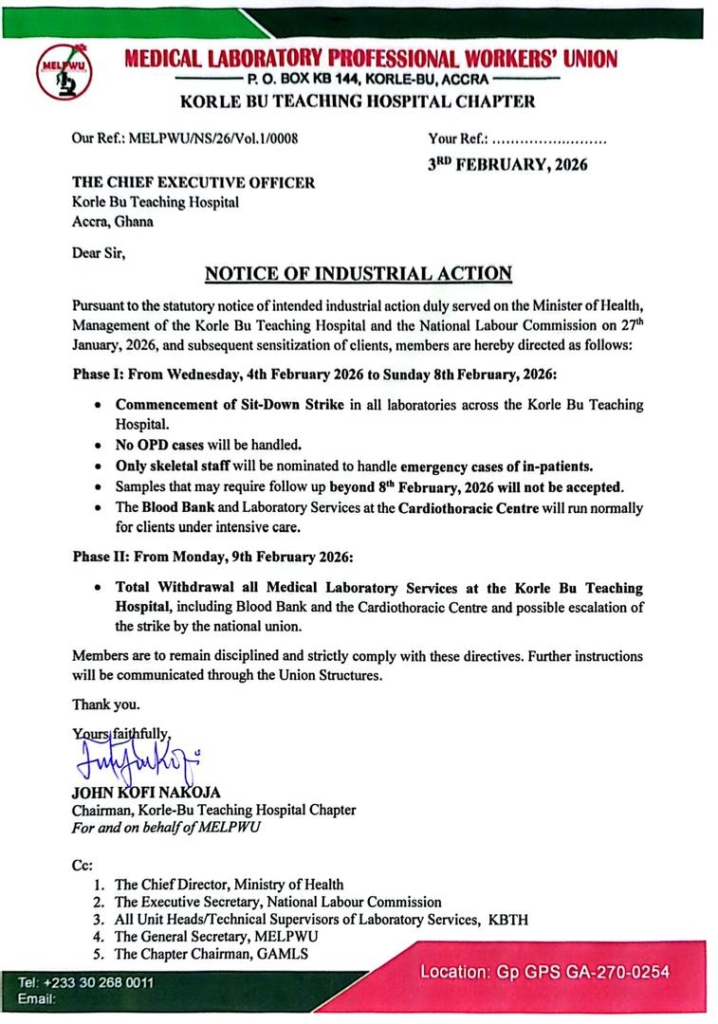
The situation is expected to worsen on Monday, February 9, 2026, when MELPWU plans a total withdrawal of laboratory services at Korle Bu, including the Blood Bank and Cardiothoracic Centre, effectively shutting down one of the hospital’s most vital diagnostic functions.
The union has also warned of a “possible escalation by the national union,” suggesting that the industrial action could expand nationwide if discussions fail.
This strike follows a statutory notice of intended action served on the Minister of Health, Korle Bu Management, and the National Labour Commission on January 27, 2026. Although MELPWU has not publicly detailed its grievances, industrial actions of this kind typically relate to unresolved issues concerning conditions of service, allowances, logistics, and workplace safety.
Health experts warn that the strike could paralyse non-emergency care at the country’s largest referral facility, causing delayed diagnoses, postponed surgeries, and interruptions in patient monitoring if the standoff is not quickly resolved.
ALSO READ: