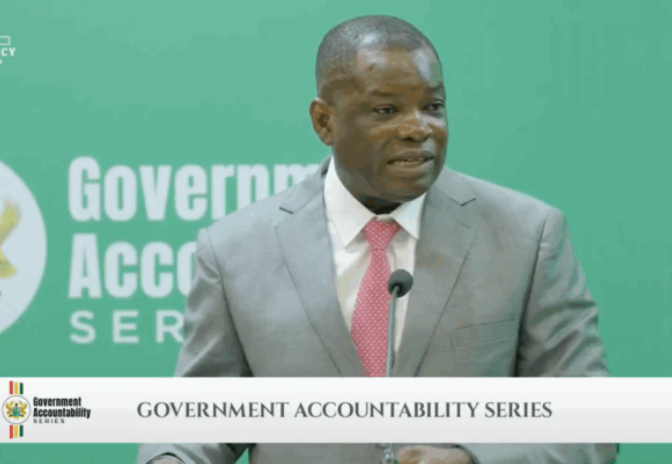

The Minister of Roads and Highways, Kwame Governs Agbodza, has disclosed that the proposed Accra–Kumasi Expressway will be fitted with essential support facilities, including fuel stations, electric vehicle charging points, and fire stations, to enhance safety and convenience for motorists.
Speaking on GTV’s Breakfast Show, Mr Agbodza explained that the project is being designed as a modern, controlled-access expressway, stressing that movement along the corridor will be well regulated.
“It will not be a free-for-all along the corridor. There will be provision for all the things that you need, including filling stations, vehicle charging points, and fire stations,” the minister said.
According to him, the new expressway will significantly reduce both travel distance and journey time between Accra and Kumasi. While the existing route covers about 250 kilometres and can take up to six hours, the proposed expressway is expected to be under 200 kilometres, cutting travel time to approximately two and a half hours.
Mr Agbodza noted that the project complies with ECOWAS transport regulations, which require expressways to operate on a user-pay (toll) basis, while still ensuring alternative routes for motorists who may opt not to use the tolled road.
He was quick to allay public concerns that existing roads would be neglected, assuring that the current Accra–Kumasi highway and other major routes, including the Beach Road from Independence Square through Teshie to Tema, will continue to receive attention and investment.
The Minister further clarified that the expressway will not pass through towns or settlements. Instead, it will follow a greenfield alignment—an entirely new route—with access roads planned to connect nearby communities.
“We will give access that connects communities to the main road, but we are not driving the expressway through towns and settlements,” he stated.
Providing additional details, Mr Agbodza revealed that the expressway will span about 200 kilometres, feature six lanes, and include approximately eight interchanges as well as three river crossings. The project will be implemented under a 50-year concession arrangement and funded through government investment under the Big Push initiative.
He added that feasibility studies and design works are currently ongoing, with construction expected to begin later this year once all preparatory processes are completed.