
Across the world, sustainable economic transformation rests on a simple truth: lasting progress is possible only when foundational pillars are strong, coherent, and deliberately built.
For years, however, Ghana’s macroeconomic signals, governance structures, and social cohesion have often moved out of sync, limiting the country’s ability to convert potential into sustained growth. Periods of stability were frequently undermined by institutional weaknesses, while reforms struggled to gain traction without aligned economic and social pillars.
Today, Ghana finds itself in a unique position. Key pillars—macroeconomic stability, institutional reform, and social progress—are increasingly aligning. The groundwork for long-term prosperity is becoming visible, and the focus must now be on protecting these gains, deepening them, and channeling their benefits to the daily lives of citizens and businesses.
Macroeconomic Stability
Over the past year, Ghana has made notable strides in restoring economic predictability—a critical ingredient for investor confidence and business planning. Stability in the cedi, improved inflation management, a disciplined fiscal framework, and prudent debt management provide a foundation for growth. When these indicators hold steady, businesses can plan long-term, families can predict their cost of living, and the nation can focus on development rather than uncertainty.
Institutional Reforms
Equally important are efforts to strengthen governance and regulatory frameworks. Transparent, responsive institutions insulated from abuse are essential for national development. Recent constitutional, regulatory, and administrative reforms—particularly those enhancing accountability, oversight, and resource management—are steps in the right direction.
A prime example is the commitment control rule under the amended Public Financial Management Act, which now requires Ministry of Finance approval before public contracts become valid. This reform has tightened fiscal discipline, curbed indiscriminate contract awards, and protected the state from avoidable liabilities.
Other efficiency-driven reforms are reshaping key institutions: the Public Procurement Authority has upgraded systems to reduce opaque sole sourcing; the Ghana Gold Board is enforcing stricter oversight of gold licensing; COCOBOD has strengthened auditing and quality control across the cocoa value chain; and the Electricity Company of Ghana has intensified revenue protection through metering and digital monitoring.
Building on the Foundation
While laying strong foundations is critical, real transformation occurs when these foundations are used to create tangible benefits. For many young Ghanaians, economic stability is meaningful only when it translates into jobs and opportunities. Youth unemployment remains one of the country’s most pressing challenges.
To unlock their potential, Ghana must channel stability into sectors that generate employment: agribusiness, light manufacturing, digital services, green energy, tourism, and more. Strengthening financial reforms, expanding development finance institutions, and improving access to affordable credit will empower small and medium-sized enterprises (SMEs)—the backbone of the economy—to grow and thrive.
Peace and social cohesion are equally vital. Development thrives only where communities feel secure. Beyond law enforcement, strengthening community dialogue, early-warning mechanisms, and local leadership is essential.
With these fundamentals in place, Ghana can accelerate major initiatives such as the 24-hour economy, large-scale infrastructure projects, and industrialisation. Momentum must now be converted into real economic gains—jobs, investment, and inclusive prosperity.
All Onboard
Ghana is at a promising crossroads. Strong economic and governance foundations are not ends in themselves—they are enablers. They support a broader vision: a nation where businesses flourish without unnecessary hurdles, where young people find meaningful work, where communities feel secure, and where prosperity is shared, not confined to an elite few.
The task ahead is clear. All stakeholders—government, private sector, civil society, and citizens—must guard progress, deepen reforms, and transform stability into opportunity. Ghana has laid the foundation. Now is the time to build boldly, inclusively, and with unwavering commitment to the wellbeing of every citizen.
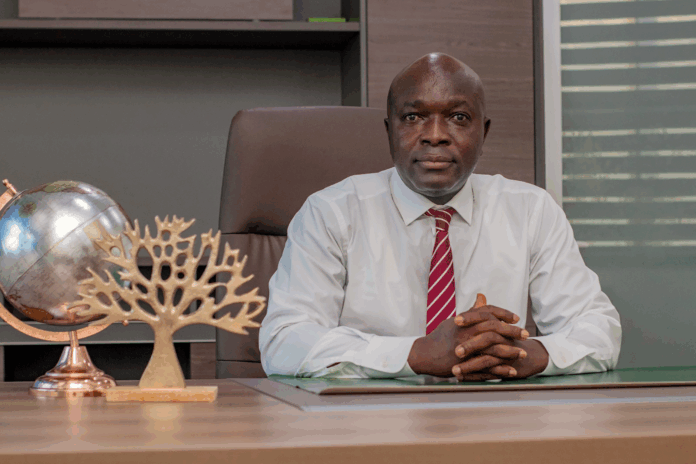
Alhaji Seidu Agongo is a businessman and philanthropist.
READ ALSO: