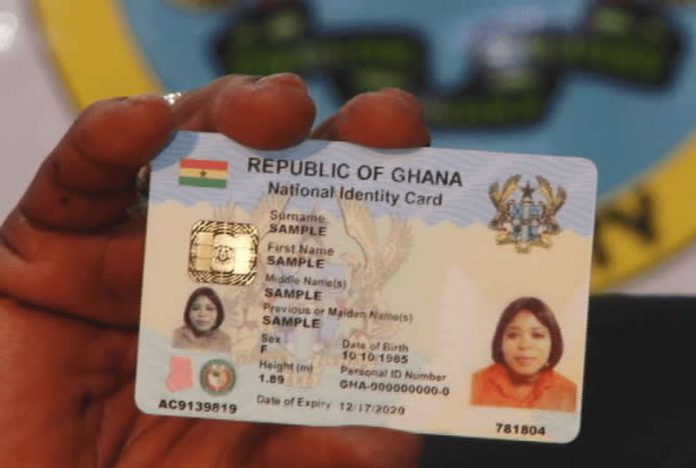

The Ghana Card has once again been positioned as a critical tool in the fight against fraud in the financial sector, as the government announces new measures aimed at combating money laundering and related financial crimes.
In a joint move, the Bank of Ghana (BoG) and the Financial Intelligence Centre (FIC) have introduced stricter requirements mandating foreign exchange bureau operators to demand a valid Ghana Card from customers before conducting any transaction.
The measures form part of the Anti-Money Laundering, Combating the Financing of Terrorism and Combating the Proliferation Financing (AML/CFT/CPF) Guidelines for Foreign Exchange Bureaux, which took effect immediately upon their issuance in September 2025.
Foreign exchange bureaux have long been identified as vulnerable channels for money laundering and other financial crimes. Authorities say the compulsory use of the Ghana Card—already the primary identification document for banking transactions—will help close existing loopholes and strengthen regulatory oversight.
The guidelines are expected to enhance the detection, prevention and mitigation of risks associated with money laundering, terrorism financing and proliferation financing. They also require forex bureaux to strictly enforce Customer Due Diligence (CDD) procedures using the Ghana Card.
Under the new rules, foreign exchange bureaux must prominently display notices in customer service areas informing clients that a valid Ghana Card is required for all transactions. For transactions involving amounts of US$10,000 or more, operators are mandated to capture customers’ Ghana Card details and conduct biometric verification to confirm their identities.
The guidelines further require enhanced scrutiny of transactions involving Politically Exposed Persons (PEPs). Forex bureaux are expected to identify such individuals and report any suspicious transactions to the relevant authorities within 24 hours.
The Ghana Card has increasingly become the country’s primary form of identification, playing a significant role in reducing identity fraud in both the financial and telecommunications sectors. It is also required to access a wide range of government services, including passport and driver’s licence applications, vehicle insurance and business registration.
Regulators say the latest directive reinforces the central role of the Ghana Card in safeguarding the integrity of Ghana’s financial system.