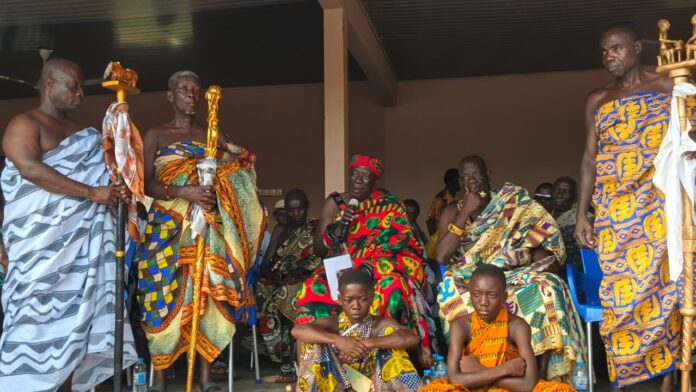

The Apesokubi Traditional Council in the Biakoye District of the Oti Region has officially launched the 2026 edition of the Kosa Festival, an initiative aimed at reviving the area’s cultural heritage, strengthening unity and promoting socio-cultural development.
The Kosa Festival, also known as Okoasa, is deeply rooted in the traditions, history and spiritual resilience of the Apesokubi people. It is intended to serve as a unifying platform for indigenes to reconnect with their roots, celebrate shared values and foster communal harmony.

The festival will bring together communities under the Apesokubi paramountcy, including Kabosereso, Okrabe, Anyinesem, Okaniease, Adobesu, Kpleso, Bawa Akuraa, Akrokrowa, Nsambem and surrounding settlements.
Organisers say the festival will be celebrated annually and will also serve as an educational platform, particularly for the younger generation, while encouraging active participation from Apesokubi citizens both at home and in the diaspora.
Speaking to Adom News at the launch, Chairman of the Festival Planning Committee and Sanahene of the Apesokubi Traditional Area, Nana Asubonteng Baafi II, said the Kosa Festival is a deliberate effort to reconnect the youth with their ancestral values and cultural identity.
He noted that the festival will also provide an opportunity to celebrate the achievements of the community and mobilise support for development initiatives across the traditional area.
Nana Asubonteng Baafi II appealed to residents and indigenes in the diaspora to support the festival, stressing that the preservation of cultural heritage is key to sustaining the future of the community.
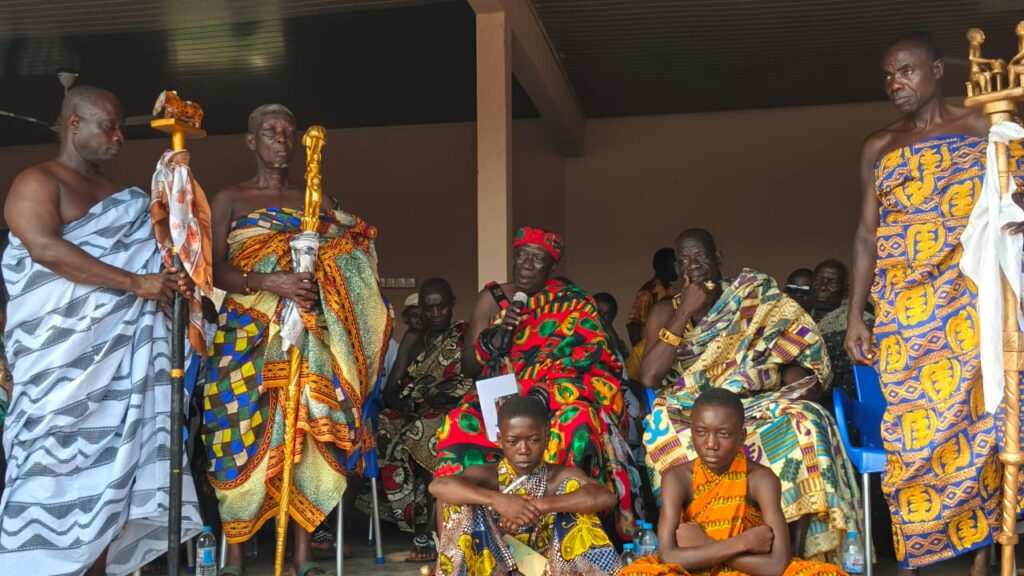
The Paramount Chief and President of the Apesokubi Traditional Council, Nana Okogyeaman Asiedu Kuram, used the occasion to recount the history of the Apesokubi people, explaining that their ancestors migrated from Berekum in the Bono area before settling in their current location.
According to him, the introduction of the Kosa Festival will give the younger generation a renewed sense of identity and pride in their heritage, especially at a time when aspects of Apesokubi culture have declined due to prolonged conflicts and disturbances in the area.
He recalled that past wars and instability disrupted commercial activities and contributed to the erosion of cultural practices, making the revival of such traditions even more urgent.
Nana Okogyeaman Asiedu Kuram therefore called on all stakeholders, including traditional leaders, youth groups and community members, to work together to ensure the success of the Kosa Festival and restore the cultural vibrancy of Apesokubi.