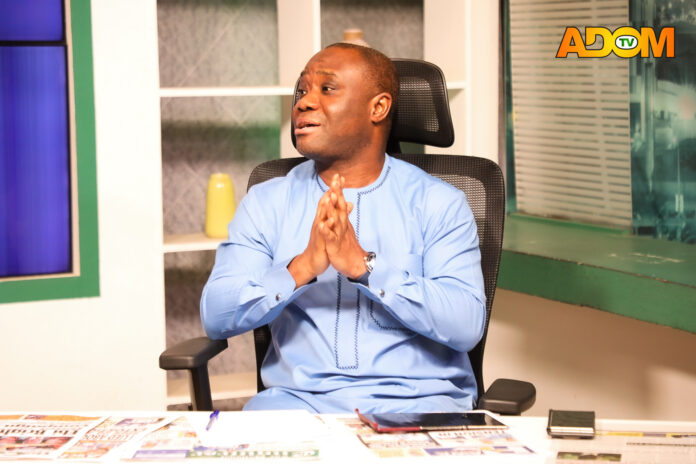

Minister in charge of Government Communications, Felix Kwakye Ofosu, has described the sharp depreciation of the cedi between 2022 and 2023 as the most disastrous period in Ghana’s contemporary economic management, arguing that its impact plunged millions of citizens into hardship.
Speaking on JoyFM’s Super Morning Show on Wednesday, December 31, Mr Ofosu said the rapid fall of the local currency severely disrupted businesses, eroded incomes, and drove up the cost of living to unprecedented levels.
He recalled that between July and November 2022, the cedi depreciated sharply from about GH₵6 to nearly GH₵17 to the dollar, a development he said crippled businesses and forced many to shut down.
According to him, inflation climbed to about 54 per cent at its peak, leaving households struggling to cope with daily price hikes.
Mr Ofosu cited a Ghana Statistical Service report indicating that in 2023, about 8.5 million Ghanaians went to bed hungry at some point, attributing the situation to what he described as economic mismanagement under the previous New Patriotic Party (NPP) administration.
He added that unemployment also surged during the period, reaching about 14 per cent, translating into roughly two million unemployed youth.
The social sector, he argued, was equally affected, with challenges in education and health despite the Free SHS policy.
He noted that feeding and textbook supply became major problems in schools, while the National Health Insurance Scheme was saddled with persistent debt, forcing service providers to protest over delayed payments.
Against this backdrop, the Government Communications Minister said any administration taking over from the NPP would inevitably face severe difficulties.
He, however, argued that President John Mahama has responded decisively by appointing what he described as a competent economic management team.
He pointed to the appointment of Dr Cassiel Ato Forson as Finance Minister and Dr Johnson Asiamah as Governor of the Bank of Ghana as key steps in stabilising the economy.
According to Mr Ofosu, the outcomes are already evident, particularly in the performance of the cedi. He said for the first time in Ghana’s Fourth Republic, the local currency has recorded significant appreciation within a single year.
“The depreciation of the cedi, which was one of the biggest problems of the economy, has been tamed,” he said, noting that by the close of the year, the cedi was projected to have appreciated by about 24 to 25 per cent against the US dollar.
He stressed that such a development did not occur under the previous administration, adding that while Ghana’s import-dependent economy remains a structural challenge, currency stability has brought some relief to businesses and households.
Mr Ofosu maintained that any fair assessment of President Mahama’s economic performance must be measured against the severe conditions inherited, insisting that recent gains demonstrate a deliberate effort to restore stability and confidence in the economy.
ALSO READ: