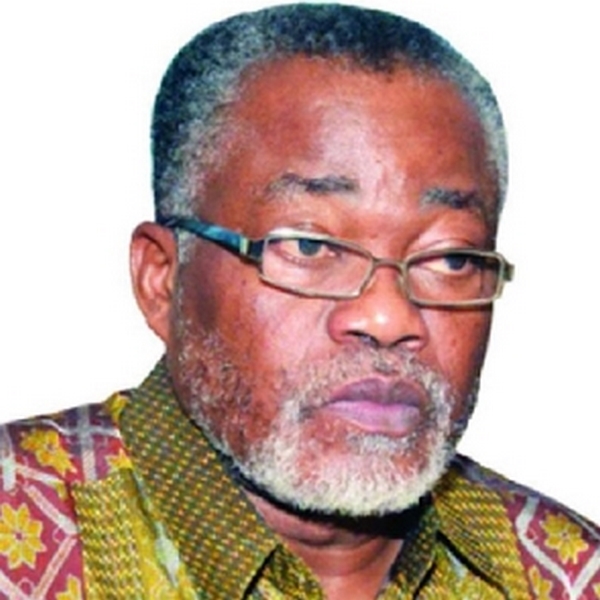

In a searing analysis of the changing security dynamics in West Africa, renowned security expert and retired diplomat Colonel Festus Aboagye (Rtd) has warned that the recent U.S. kinetic intervention in Nigeria could signal a dangerous slide toward neocolonial dependency.
In a policy paper dated December 28, 2025, titled Regional Security at the Brink: U.S. Distributed Footprint, Security Partnerships and Sovereignty Trade-Offs in Post-Niger West Africa, Col. Aboagye dissected the Christmas Day 2025 airstrikes in Sokoto State.
He argues that while the strikes targeted terrorists, they exposed a “troubling divergence” in how Washington and Abuja perceive the conflict—a gap that extremist groups are already beginning to exploit.
The Sokoto Strikes: A Shift in Doctrine
The Christmas Day operation marks a definitive transition for the United States from an advisory role to direct kinetic intervention on Nigerian soil.
While the strikes were coordinated, Col. Aboagye highlights a narrative clash: the U.S. framed the violence through the lens of religious persecution, whereas Nigeria views it as a multifaceted security crisis affecting all citizens regardless of faith.
This “religiously charged rhetoric”, Col. Aboagye warns, provides a potent recruitment tool for terrorist organisations.
He notes that the U.S. has adapted to its withdrawal from Niger by creating a “decentralised military footprint” across Ghana, Benin, Côte d’Ivoire, and Chad.
The Danger of ‘Outsourcing’ Stability
Col. Aboagye expressed deep concern that Africa is gradually “outsourcing” its security to external powers whose containment strategies may not align with the continent’s long-term peace.
“The international community must remain vigilant that the ‘regional security’ narrative does not become a vehicle for undermining African sovereignty under the guise of protecting lives. This is the challenge for the African Union,” he asserted.
He describes the current trend as a “geopolitical vacuum” created by regional fragmentation, particularly the divide between the AU and the Alliance of Sahel States (AES).
A Proactive Framework: The 5-Point Policy Mandate
To counter this externalised interventionism, Col. Aboagye proposed five radical institutional shifts for the African Union Peace and Security Council (PSC):
| Recommendation | Strategic Objective |
| Continental Oversight | Require foreign powers to notify the AU of any strike within 24-72 hours. |
| African-Led Analysis | Mandate the ACSRT to issue independent reports to prevent Western “narrative weaponization.” |
| Regulate Drone Usage | Develop an AU Continental Drone Policy to limit the duration and scope of foreign UAVs. |
| Reinvigorate the ASF | Fast-track the African Standby Force to include counterterrorism capabilities. |
| Sahel Reconciliation | Convene a dialogue to re-engage AES members (Mali, Burkina Faso, Niger) without political strings. |
The ‘Sovereignty’ Reality Check
The retired Colonel was intellectually honest about the hurdles facing these recommendations.
He questioned why the African Standby Force (ASF)—which has faced 20 years of underfunding—would suddenly become operational now.
He also noted that the AU has no real enforcement mechanism to stop a superpower from ignoring notification requirements.
However, he maintained that these obstacles do not diminish the necessity of the measures.
“The goal is to prevent the gradual entrenchment of coastal states as permanent launch platforms for external military operations outside a collective AU strategy,” he concluded.
As 2026 approaches, the “Sokoto Precedent” stands as a litmus test for whether African regional organisations can reclaim their agency or remain spectators in their own security landscape.