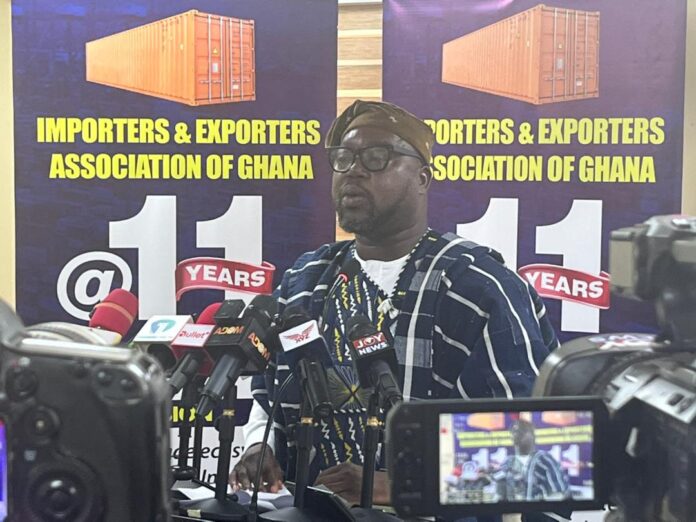

The Importers and Exporters Association of Ghana (IEAG) has raised concerns over plans to introduce an Artificial Intelligence (AI)–driven system at Ghana’s ports, urging government to ensure transparency, data security and full integration with the existing Integrated Customs Management System (ICUMS).
Addressing a press conference in Accra on Wednesday, December 18, 2025, the Executive Secretary of the Association, Samson Asaki Awingobit, said while the group supports port modernisation, any new digital system must be credible, secure and aligned with Ghana’s national trade infrastructure.
As part of its year-in-review, the Association reported improved customs revenue performance, noting that revenue increased from about US$3.1 billion in 2024 to over US$3.17 billion as at September 2025. This, it said, was largely driven by ICUMS and broader trade facilitation reforms.
The IEAG acknowledged challenges with intermittent system downtimes but praised collaborative efforts by stakeholders to enhance system resilience and efficiency.
The Association also highlighted positive macroeconomic developments, including the removal of the COVID-19 levy, VAT adjustments, relative stability of the cedi, declining inflation and reduced interest rates. These trends, it said, have helped ease the cost of doing business for traders.
However, the IEAG expressed strong reservations over reports that a Cyprus-registered firm, Truedare Investments Limited, has been contracted to deploy an AI-based port system from 2026. According to the Association, there is no publicly verifiable evidence of the company’s technical capacity, operational track record or engagement with key stakeholders.
The group warned that allowing a foreign private entity to rely heavily on ICUMS data could pose risks to data sovereignty, cybersecurity and revenue assurance, while potentially increasing the cost of doing business at the ports.
The Association therefore called on government to prioritise broad stakeholder consultations, ensure Ghana retains full control over its customs data, and invest in capacity building for local customs and technical officers to safeguard the country’s trade and port systems.
READ ALSO: